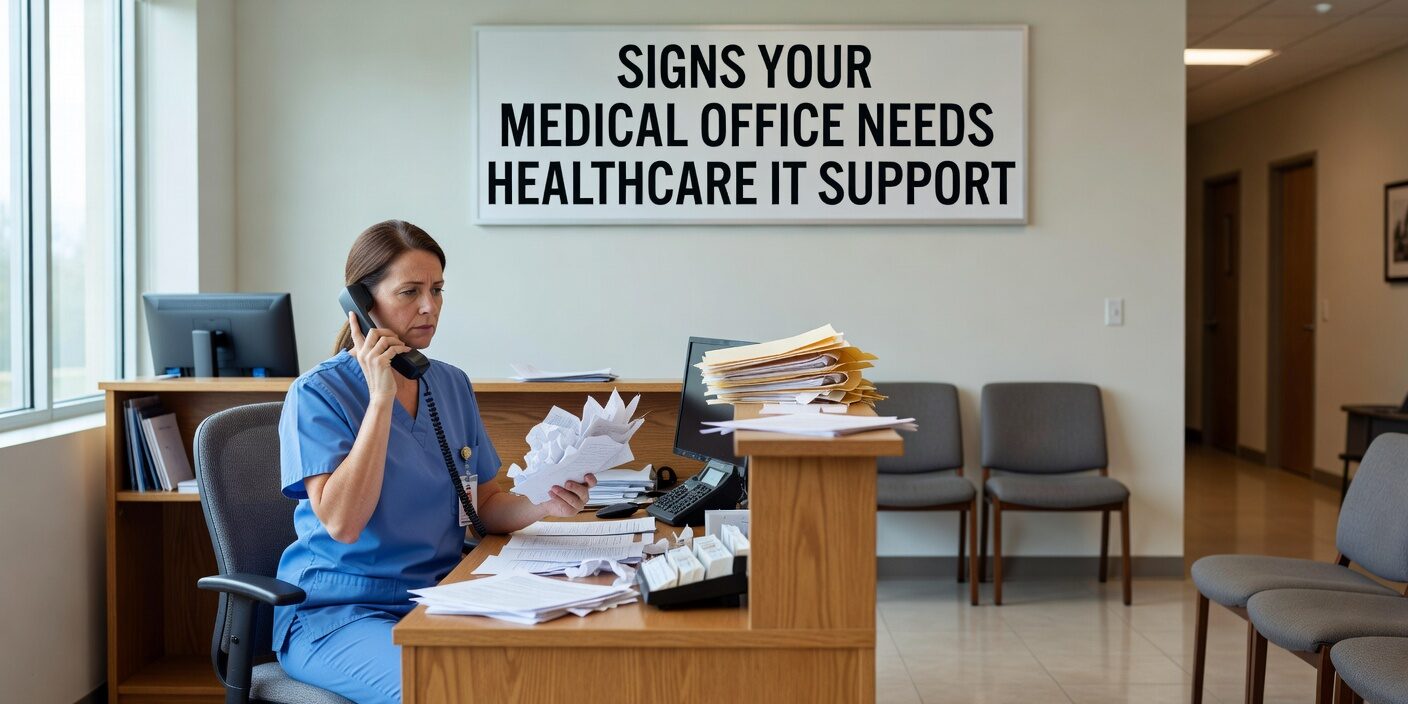
Medical practices today depend on technology for everything from patient records to appointment scheduling. Yet many healthcare administrators struggle to recognize when their current IT approach isn’t meeting their needs. Understanding the signs your medical office needs healthcare IT support can help you address problems before they impact patient care, compliance, or your bottom line.
Recognizing these warning signs early allows you to take proactive steps to protect patient data, maintain HIPAA compliance, and keep your practice running smoothly. Here’s what to watch for in your daily operations.
System Performance and Reliability Issues
Frequent system crashes are among the most obvious indicators that your practice needs professional IT attention. When your electronic health records (EHR) system goes down during patient visits, or when computers freeze regularly, you’re dealing with more than minor inconveniences.
Slow network speeds can cripple your practice’s efficiency. If staff members are waiting more than a few seconds for patient records to load, or if your internet connection drops during telehealth appointments, these delays add up quickly. Research shows that network problems can reduce staff productivity by 20-30% as employees resort to manual workarounds.
Server outages that affect your entire practice are serious red flags. When your scheduling system, billing software, or patient portal goes offline regularly, you’re not just losing productivity—you’re potentially losing patients and revenue.
HIPAA Compliance Vulnerabilities
HIPAA compliance isn’t optional, and technology problems can create serious regulatory risks. If your practice lacks proper data encryption, struggles with access controls, or can’t generate audit logs when needed, you’re facing potential violations.
Outdated security measures are particularly dangerous. If your practice still relies on basic password protection without multi-factor authentication, or if staff members share login credentials, you’re vulnerable to data breaches that could result in significant fines.
Incomplete business associate agreements with technology vendors represent another compliance gap. If you can’t verify that all your software providers and IT contractors have proper HIPAA safeguards in place, you need professional guidance to assess and address these risks.
Data Management and Backup Concerns
Data loss can devastate a medical practice. If your practice lacks a reliable backup system, or if you’re unsure when backups were last tested successfully, you’re operating without a safety net.
Poor system integration creates inefficiencies and compliance risks. When your EHR doesn’t communicate properly with your billing system, or when patient portal messages don’t sync with medical records, staff waste time on duplicate data entry and risk missing important patient communications.
If retrieving patient records takes more than a few minutes, or if staff members complain about difficulty accessing historical patient data, these delays can impact the quality of care and patient satisfaction.
Email Security and Communication Gaps
Email remains a common attack vector for healthcare cybercriminals. If your practice uses standard email for any patient communications, lacks email encryption, or has experienced suspicious email activity, you need better security measures.
Staff clicking on suspicious links or opening questionable attachments indicates insufficient cybersecurity training and inadequate email filtering systems.
Staff Productivity and Workflow Problems
Technology should make your staff more efficient, not create additional burdens. If employees regularly work around system limitations, spend significant time on manual data entry, or express frustration with slow or unreliable software, these are clear indicators of inadequate IT support.
Increased administrative workload often signals poor technology integration. When staff members must enter the same information multiple times across different systems, or when they can’t easily generate reports needed for patient care or billing, you’re losing valuable time and money.
If your practice has grown but your technology hasn’t scaled accordingly, you may notice that systems that once worked adequately now struggle to handle your patient volume and data requirements.
Vendor Management and Support Issues
Relying on multiple IT vendors without coordination often creates gaps in support and security. If you’re not sure who to call when problems arise, or if different vendors blame each other for ongoing issues, you need a more structured approach to technology management.
Delayed problem resolution is another warning sign. If IT issues routinely take days or weeks to resolve, affecting patient care and staff productivity, your current support model isn’t adequate for a healthcare environment.
Lack of proactive maintenance often leads to bigger problems. If your practice only addresses technology issues after they cause downtime or disruption, rather than preventing problems through regular updates and monitoring, you’re operating in reactive mode that increases costs and risks.
Financial and Operational Impact
Technology problems have real financial consequences. If your practice experiences revenue delays due to billing system issues, loses patients due to scheduling problems, or faces potential fines from compliance gaps, the cost of professional IT support becomes an investment rather than an expense.
Unbudgeted IT expenses often indicate poor planning and management. If your practice regularly faces surprise costs for emergency repairs, software licensing issues, or system replacements, you need better IT planning and oversight.
For practices considering IT support planning for growing clinics, evaluating these warning signs provides a clear starting point for improvement.
What This Means for Your Practice
Recognizing these warning signs early allows you to address technology problems before they escalate into major disruptions, compliance violations, or security breaches. Professional IT support provides the expertise, planning, and ongoing monitoring that healthcare practices need to operate efficiently and securely.
Modern IT management tools can help you maintain consistent system performance, ensure HIPAA compliance, and provide the reliable technology foundation your practice needs to deliver excellent patient care. The key is addressing these issues proactively rather than waiting for a crisis.
Ready to evaluate your practice’s IT needs? Contact MedicalITG today for a comprehensive technology assessment that identifies risks, prioritizes improvements, and creates a roadmap for reliable, compliant IT operations.