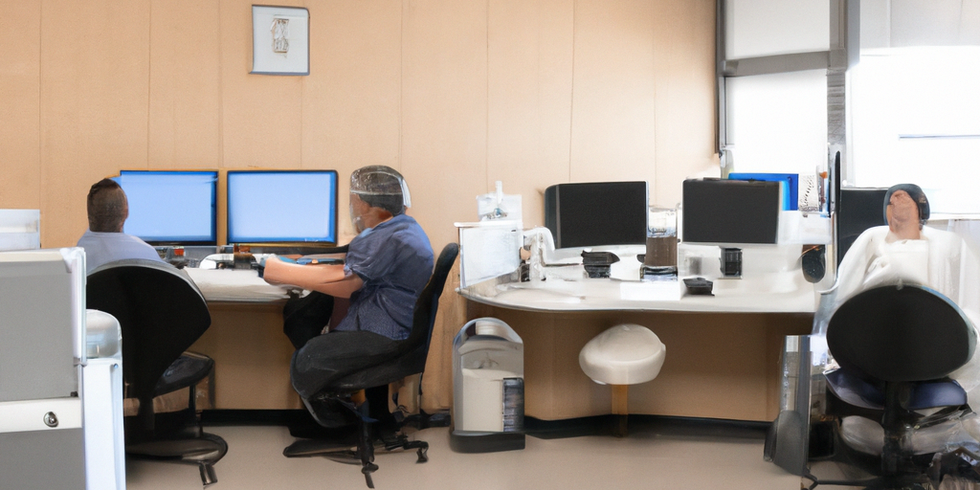
When evaluating IT support for your medical practice, a comprehensive managed IT support checklist for healthcare practices helps ensure you’re protecting patient data while maintaining efficient operations. The wrong IT partner can expose your practice to compliance violations, security breaches, and costly downtime that disrupts patient care.
Healthcare practices face unique IT challenges that require specialized expertise. From HIPAA compliance requirements to protecting against ransomware attacks targeting patient records, your IT support must understand both healthcare regulations and medical workflow needs.
Essential HIPAA Compliance Requirements
Your managed IT provider must establish a Business Associate Agreement (BAA) before accessing any systems containing protected health information. This legal requirement makes them responsible for safeguarding patient data according to HIPAA standards.
Key compliance elements to verify include:
• Annual risk assessments with documented findings and remediation plans • Role-based access controls ensuring staff only access necessary patient information • Multi-factor authentication for all system logins and administrative access • Data encryption for information stored on servers and transmitted between systems • Comprehensive audit logging tracking who accessed what patient information and when • Incident response procedures for potential security breaches or data exposures
Your IT partner should designate a HIPAA Security Officer who understands healthcare compliance requirements and can guide your practice through regulatory changes.
Critical Cybersecurity Monitoring and Protection
Healthcare practices are prime targets for cybercriminals seeking valuable patient records and financial information. Your IT support must provide layered security defenses that protect against sophisticated attacks.
Essential security capabilities include:
• 24/7 Security Operations Center (SOC) monitoring for real-time threat detection • Advanced endpoint protection across computers, tablets, and connected medical devices • Network vulnerability assessments conducted regularly with timely patching • Email security systems blocking phishing attempts and malicious attachments • Network segmentation separating clinical systems from administrative networks • Backup and disaster recovery testing to ensure rapid restoration after incidents
Modern AI-driven security monitoring can significantly reduce potential cybersecurity incidents. Look for providers who use predictive analytics to identify threats before they impact your operations.
Infrastructure Management and Performance Monitoring
System downtime in healthcare settings can delay patient care and create liability risks. Your managed IT support checklist for healthcare practices should prioritize continuous monitoring of critical infrastructure.
Key monitoring areas include:
• Server performance and capacity to prevent slowdowns during peak usage • Network connectivity stability ensuring reliable internet and internal connections • Medical device integration maintaining communication between EHR systems and diagnostic equipment • Power and cooling systems protecting servers and network equipment • Hardware health indicators enabling predictive maintenance before failures occur
Proactive monitoring prevents many issues that would otherwise cause emergency service calls and system outages.
EHR and Medical System Integration Support
Healthcare practices rely on multiple interconnected systems that must communicate securely and efficiently. Your IT support should have specific expertise in medical software integration.
Critical integration areas include:
• Electronic Health Record (EHR) optimization ensuring fast performance and data accuracy • Practice management software handling scheduling, billing, and administrative functions • Laboratory and imaging interfaces automatically importing test results • Telehealth platforms supporting remote patient consultations • Medical device connectivity integrating vital sign monitors, diagnostic equipment, and other devices
Seamless integration reduces manual data entry, minimizes errors, and improves staff productivity while maintaining security boundaries between different systems.
Responsive Help Desk and User Support
Human error remains a leading cause of healthcare data breaches, making staff training and responsive technical support essential for protecting patient information.
Effective help desk services should provide:
• 24/7 technical support with HIPAA-trained technicians who understand medical workflows • Rapid response protocols for clinical system issues that could delay patient care • Multiple support channels including phone, secure email, and remote assistance • Clear escalation procedures ensuring complex problems reach senior technicians quickly • Regular staff training on security best practices and proper system usage
Look for providers who track response times and resolution rates, demonstrating their commitment to minimizing disruptions to your practice.
Scalability and Strategic IT Planning
Your medical practice will likely grow and evolve, requiring IT infrastructure that can adapt to changing needs. Effective IT support planning for growing clinics should include capacity planning and technology roadmap development.
Consider these scalability factors:
• Cloud infrastructure options that can expand or contract based on your needs • Multi-location support capabilities for practices with multiple offices • Telemedicine platform scalability to accommodate growing remote patient services • Integration capabilities for new medical devices and software applications • Budget planning assistance for technology upgrades and expansion projects
What This Means for Your Practice
Using a comprehensive managed IT support checklist for healthcare practices helps you identify the right technology partner while avoiding costly mistakes. The right IT provider becomes a strategic partner who understands your compliance obligations, protects your patients’ sensitive information, and supports your operational efficiency goals.
Modern healthcare IT management requires specialized expertise that goes far beyond basic computer support. By evaluating potential providers against these critical criteria, you can make an informed decision that protects your practice from regulatory violations, security breaches, and operational disruptions.
Ready to evaluate your current IT support against healthcare best practices? Contact MedicalITG today for a comprehensive assessment of your practice’s technology infrastructure, security posture, and compliance readiness. Our healthcare IT specialists can help you build a more secure, efficient, and scalable technology foundation.